
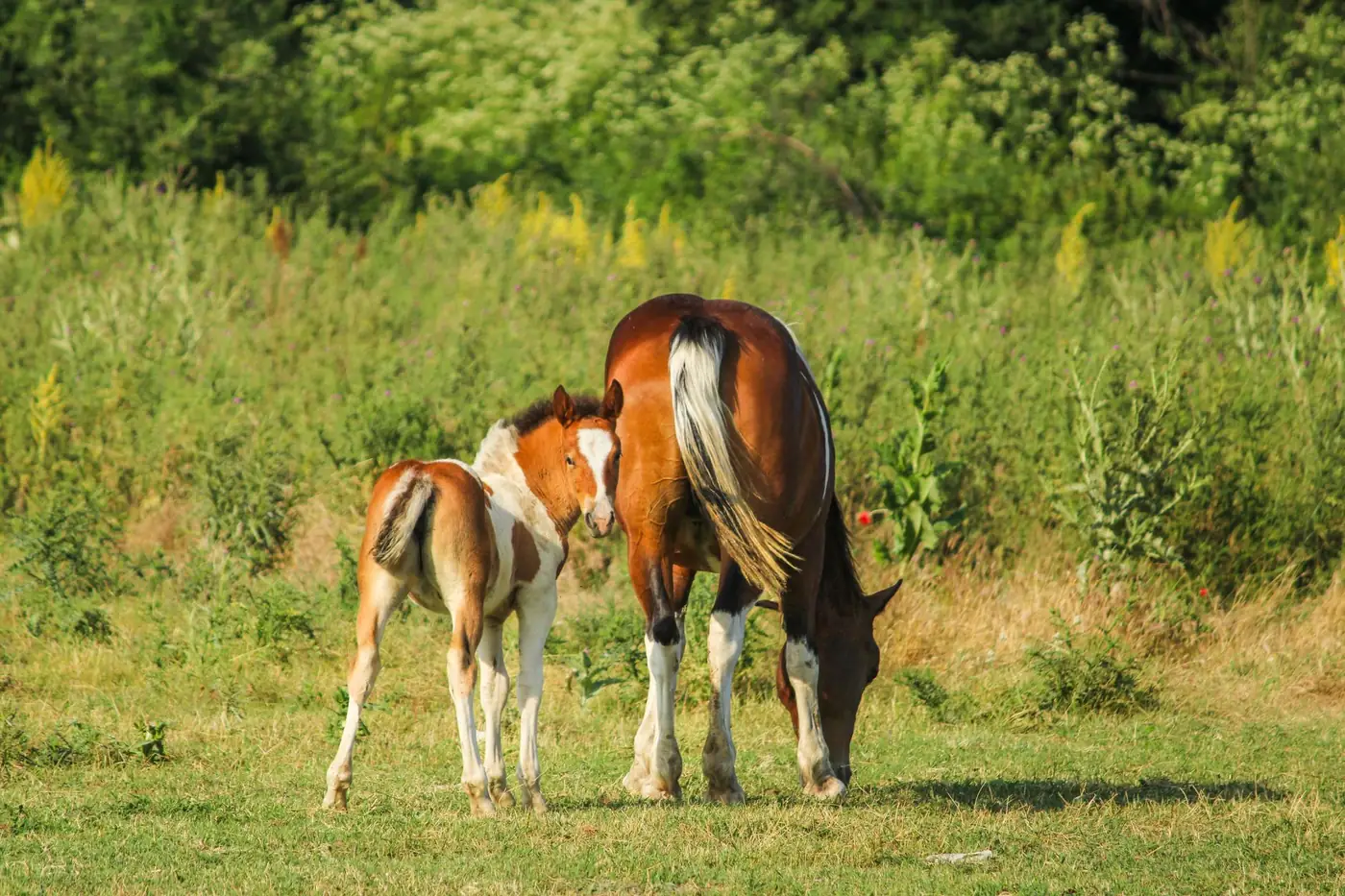
Every year around this time someone asks me what foaling season is actually like, usually because they have seen a video of a foal standing up for the first time and have decided, on the strength of ninety seconds of footage, that it looks like the nicest job in the world. It is a good job. I would not do anything else. But the gap between the video and the season itself is roughly the gap between a wedding photograph and a marriage, and it seems worth closing that gap a little before the next batch of hopeful teenagers turns up wanting work experience.
The season does not begin with a foal. It begins with a chart on the wall of the feed room, one line per mare, and a due date worked out from a covering date that was itself only ever an estimate, because mares do not read calendars and a scan can only narrow things down so far. Three hundred and forty days is the number everyone quotes. Ours have gone anywhere from three hundred and twenty to three hundred and sixty, and the only safe thing to say about a due date is that it is a suggestion, not a booking.
The Waiting Is the Job
What nobody tells you is that the actual work of foaling season is waiting, and that waiting is exhausting in a way that doing things generally is not. From about a week before a mare's earliest possible date, someone checks her last thing at night and then again at two, four and six in the morning. We used to do it by walking down the yard with a torch. Now there is a camera in each foaling box and an app on a phone, which sounds like progress and mostly is, except that a phone buzzing at half past three still gets you out of bed exactly as fast as a torch did, and you still have to actually walk down and look, because a screen the size of a playing card does not tell you whether a mare is restless because she is foaling or restless because there is a fox outside.
You learn to read the small signs long before anything obviously happens: wax on the teats, a slackening around the tailhead, a mare who suddenly wants to be left entirely alone having spent the previous fortnight following you round the box like a dog. None of it is exact. I have sat up three nights running for a mare who then foaled, without a flicker of drama, on the one night I let myself sleep through to five.
Milk testing helps narrow the window a little, and most stud yards now use simple strips that measure calcium levels in a mare's milk, which rise sharply in the day or two before foaling. It is not infallible, but combined with the visual signs it turns a completely open-ended guess into something closer to a rough forecast, which is about as much certainty as this job ever offers.
What Actually Happens at Two in the Morning
When it does start, it is fast. A mare in the second stage of labour is usually finished within twenty to thirty minutes, which is why the checking matters so much more than people expect; miss the window and you find out about problems after they have already become problems, rather than while there is still time to do something about them. Most of the time you do nothing at all except watch from the doorway with your hands in your pockets, because a straightforward foaling wants an audience, not a helper, and the mare will manage it far better without someone fussing round her.
The moments when you do step in are the ones that stay with you: a foal presented with a leg back, a red bag that should have broken and has not, a mare who has had a difficult birth before and needs someone steady at her head so the vet can work. Those nights are rare, but they are the reason someone is always awake within earshot of the foaling boxes for six or seven weeks solid, which is its own kind of toll that does not show up in any of the photographs.
The Bit Nobody Photographs
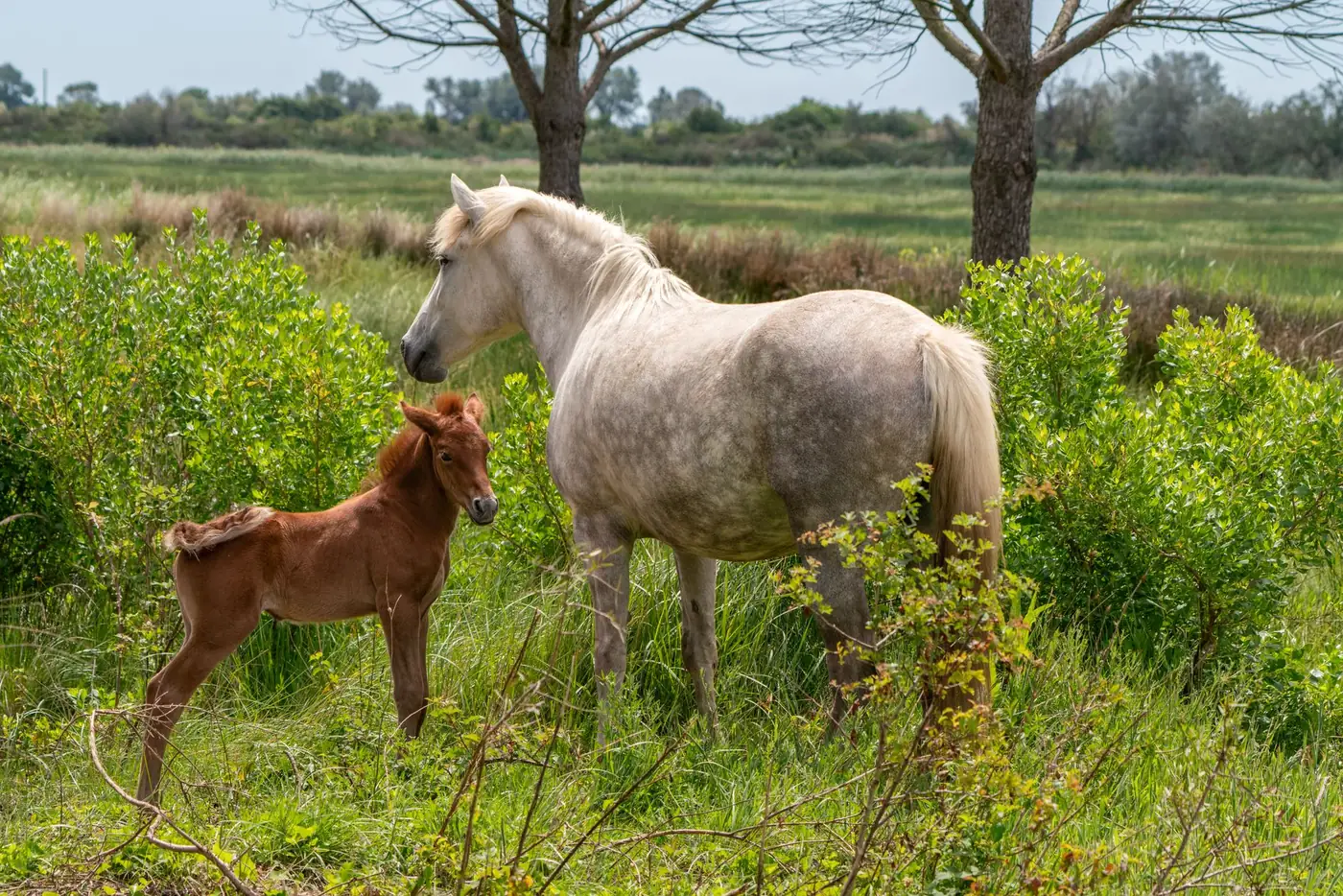
The genuinely lovely part, the part that does deserve the reputation, comes in the hour or so after a straightforward birth: a foal finding its legs, failing, trying again, and a mare turning to nose it with an expression that looks for all the world like recognition, because in a sense it is. That part is real and it is worth every lost night that leads up to it.
But then there is the rest of the hour, which is less often filmed: checking the foal has passed its first dung, watching to see it stand and suck within the first couple of hours, and, if it has not, working out fast whether that is normal variation or the beginning of a problem. There is a navel to dress. There is colostrum to test, because not every mare produces enough or good enough colostrum, and a foal that misses out on those first antibodies is a foal at real risk in its first weeks, whatever else goes right. None of that is difficult once you know it, but it is not instinctive, and it is not glamorous, and it happens at the same unsociable hour as everything else that night.
When It Goes Wrong, and Mostly It Doesn't
I want to be honest about the other side of this without being grim about it, because most seasons do not go wrong. Most mares foal easily, most foals stand and suck within a couple of hours, and most of what a good foaling attendant does is simply be there, calm, awake and unremarkable. But every yard that has done this for long enough has a story about the season that did not go to plan, and it is worth saying plainly that a lot of the reputation this work has for being nerve-shredding is earned honestly. A dystocia at three in the morning with the nearest vet forty minutes away concentrates the mind wonderfully.
We keep a card taped inside the feed room door with the vet's out-of-hours number, the nearest equine hospital's address, and a short checklist of what to have ready before the vet arrives: a clean bucket of warm water, a torch with working batteries, someone free to hold a headcollar rather than a phone. It looks slightly absurd, laminated and faintly yellowed, until the one night a year it actually gets used, at which point nobody begrudges the five minutes it took to write it years ago. Panic wastes exactly the minutes that matter most, and a checklist, however basic, is a genuinely effective way of not panicking.
The other thing worth saying, because it rarely gets said, is that this work takes a toll on the people doing it that has nothing to do with any single bad night. Six or seven weeks of interrupted sleep, however good-natured everyone stays about it, adds up, and it is not a coincidence that tempers on a stud yard tend to shorten slightly by the middle of a foaling season even when nothing has actually gone wrong. Building in proper rest rotas, rather than relying on everyone's goodwill indefinitely, is as much a part of running a season well as anything to do with the horses themselves.
The organisations that sit behind all of this, quietly, are worth a mention too. Every foal born in this country to registered parents needs to be reported and eventually recorded through the General Stud Book that Weatherbys has kept, in one form or another, for well over two centuries, and the paperwork side of a foaling season runs in parallel with the practical side whether you enjoy it or not. The Thoroughbred Breeders' Association publishes guidance on exactly this kind of thing every year, and it is worth a read even for people who think they already know it, because the small print changes more often than you would expect.
By the time the season ends, sometime around May, the whole yard is running on a kind of low hum of tiredness that takes a fortnight of normal sleep to shift. And then, without fail, someone brings a foal past the kitchen window on a lead rope for the first time, ears up, legs going in four directions at once, and you remember exactly why the six weeks before it were worth having.