
Ownership brochures, understandably, sell the days that make racing genuinely thrilling: the paddock before a big race, the walk to the winner's enclosure, the photograph with the trophy. Those days are real and they are as good as they look. What the brochures do not spend much time on is the far larger number of days that fill the calendar around them, and I think new owners are better served knowing what that actually looks like before they commit rather than discovering it gradually and feeling misled.
I have watched enough new owners arrive with expectations shaped entirely by highlight reels to know how large that gap can feel the first time reality catches up with it, and I would rather close the gap in writing here, plainly, than watch it catch someone out in person for the third time this year.
The Vet Bill Is Not an Occasional Cost
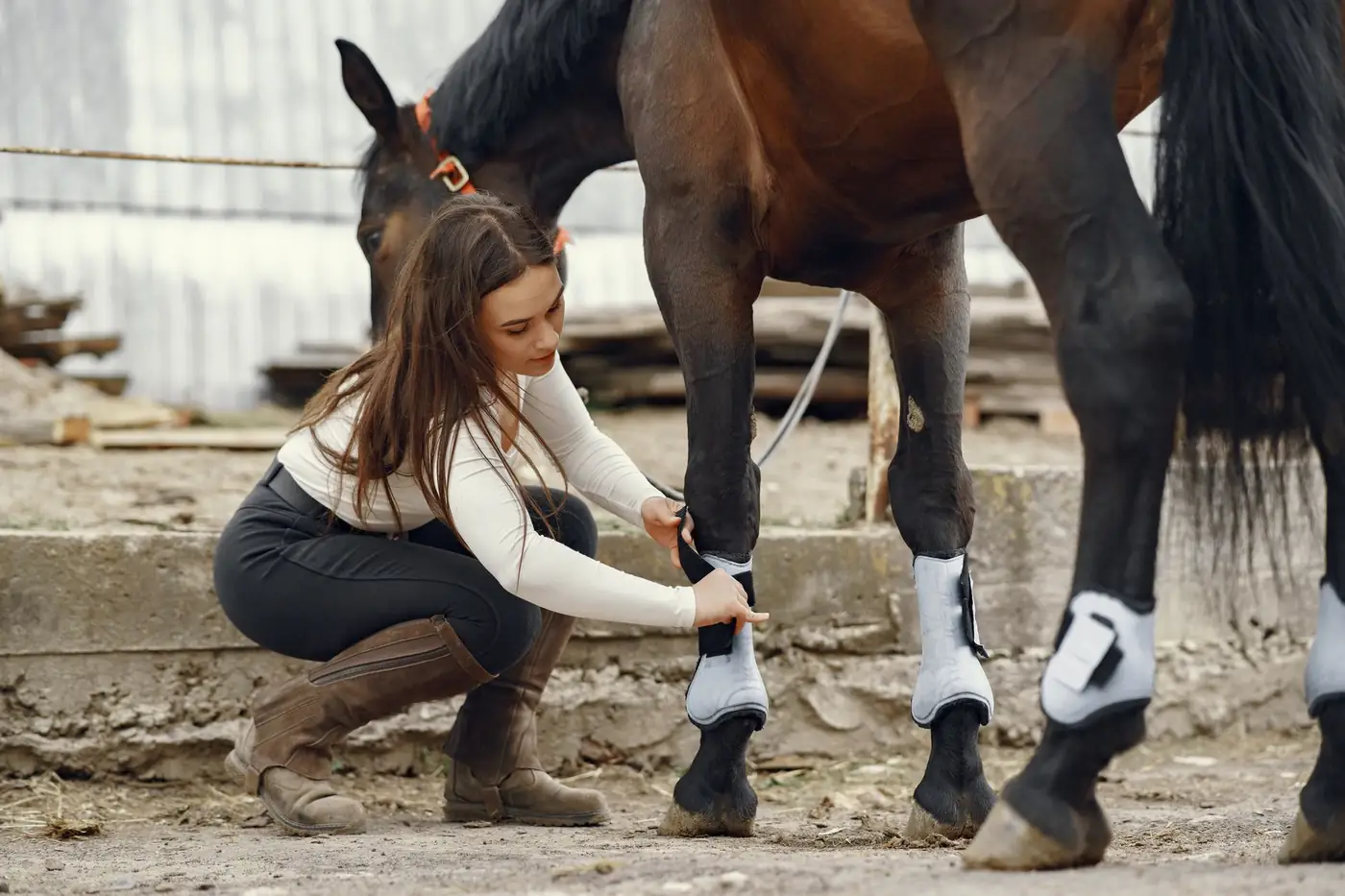
It is standard, not exceptional, for a horse in training to need veterinary attention beyond routine care at some point across a season: a scope for wind noise, treatment for a minor infection, investigation of a subtle change in a horse's action that a trainer has spotted before anyone else would notice it. Good trainers flag these things early precisely because early intervention is cheaper and more effective than waiting, but that means owners see a steady trickle of veterinary costs across a season rather than one dramatic bill they can budget around and forget.
I would encourage anyone considering ownership to talk to the Racehorse Owners Association before committing money, because they publish genuinely realistic cost breakdowns rather than the more optimistic figures sometimes quoted informally, and the gap between the two is exactly where new owners get an unpleasant surprise about six months in.
Insurance is worth a specific mention here too, because it is easy to assume a policy covers more than it actually does until the moment a claim is needed. Mortality cover, loss of use cover and third-party liability are three distinct things, priced separately, and an owner who has only bought the cheapest of the three often discovers the gap at precisely the worst possible moment. It is a dull conversation to have early in the ownership process and a considerably worse one to have for the first time after something has already gone wrong.
Setbacks Are Normal, Not a Sign of a Bad Yard
A horse that misses a planned entry because of a minor knock, a slight filling in a leg, a temperature that needs investigating, is not evidence of a poorly run yard. It is, more often, evidence of a well-run one, because a trainer who pulls a horse out of a plan at the first small sign of trouble is protecting that horse's long-term soundness at the cost of short-term convenience, which is precisely the trade-off you want someone making with your horse. Owners who arrive expecting a smooth, uninterrupted run of planned entries are almost always disappointed, not because racing is badly run but because a living, working animal simply does not operate to a fixed schedule.
I have sat with owners through a cancelled entry that clearly frustrated them more than they wanted to admit, and the ones who came out the other side still enjoying ownership were, without exception, the ones who had gone in understanding that setbacks were part of the normal texture of the sport rather than a failure somewhere along the line.
Communication from a trainer matters enormously here, more than owners always realise before they experience it. A trainer who calls proactively to explain a setback, in plain terms, before an owner has to chase for news, does more to keep an owner's confidence intact than almost anything else in the relationship. The setback itself rarely causes the frustration I have seen. Silence around it does.
Most Days Look Like Nothing at All
The actual majority of a racehorse's calendar, viewed from an owner's perspective, is quiet: routine work at home, ordinary yard life, nothing that would make it onto a results page or a photograph. I would tell any prospective owner honestly that if the appeal of ownership rests entirely on raceday itself, the maths of the experience will disappoint, because raceday is a handful of afternoons scattered across a season built almost entirely from ordinary Tuesdays. The owners who get the most lasting satisfaction from it are, in my experience, the ones who find something to enjoy in those ordinary Tuesdays too: a yard visit, a phone update from a trainer, watching a young horse's work on a video sent from the gallops.
A yard visit, properly done, is one of the best-kept secrets of ownership and one that too few new owners take up as often as they could. Standing at a stable door on an ordinary Wednesday morning, watching a string return from exercise, talking to the staff who actually know the horse's daily habits better than anyone, gives an owner a far richer sense of the whole enterprise than any raceday ever will, however good the raceday itself turns out to be.
Why It's Still Worth Doing
None of this is meant to talk anyone out of ownership. It is meant as an honest account rather than a discouraging one, because the owners who go in with realistic expectations tend to stay in the sport far longer, and get considerably more genuine enjoyment out of it, than the ones sold purely on the trophy photograph. The unglamorous side, the vet bills, the setbacks, the quiet Tuesdays, is not a flaw in the experience. It is the actual, honest shape of the experience, with raceday sitting as a small, bright, well-earned exception rather than the rule.
Ownership syndicates and shared arrangements have changed this calculation for a lot of people, and sensibly so. Splitting both the cost and the emotional investment across a small group of owners softens exactly the parts of the experience that catch newcomers out: the vet bill feels smaller shared eight ways, and a setback is easier to shrug off over a group phone call than to sit with alone on a quiet Tuesday evening. I would recommend a syndicate to almost anyone considering ownership for the first time, not as a lesser version of sole ownership but as, in most cases, a genuinely more enjoyable way into it.