
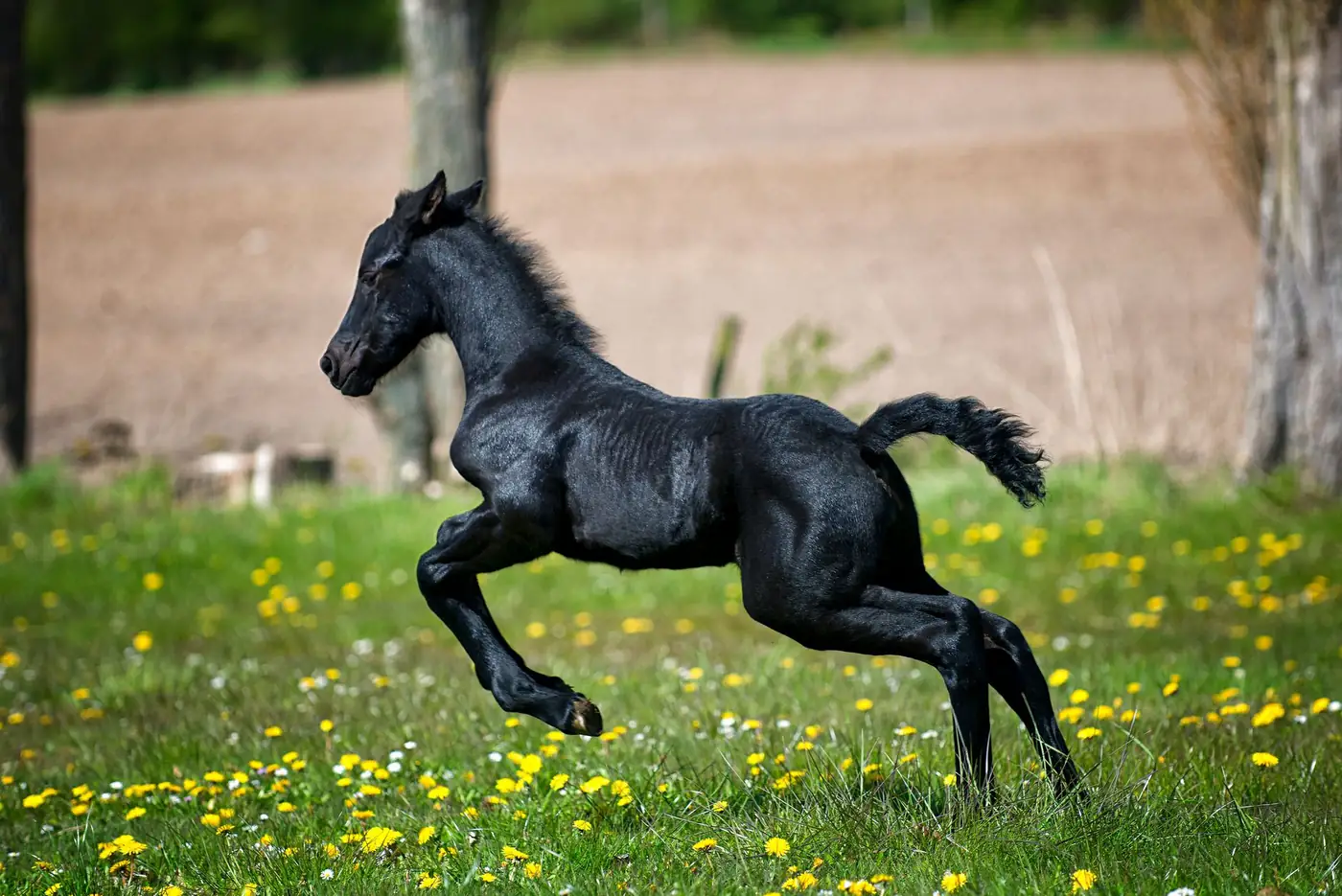
A foal at a week old and a foal at six months are, in almost every practical sense, different animals. The legs are the same rough proportions but everything else changes: the coat, the balance, the personality, the sheer physical scale of the thing. Raising a foal well through those six months is mostly a matter of getting a long list of small decisions right, one after another, none of them individually dramatic.
Week One to Week Four
The first month is dominated by the mare, as it should be. Our job is mostly to watch: to make sure the foal is suckling properly and often, to check weight gain roughly weekly, and to give both mare and foal turnout as early as the weather and the mare's own recovery allow, usually within a day or two if everything has gone smoothly.
This is also the window for the practical veterinary work that gets easier the sooner it starts: a first check-up, blood tests to confirm the foal received enough colostrum, and a foal heat period around day nine that catches out a surprising number of first-time breeders who assume the mare is fully recovered and ready for anything the moment she is back on her feet. She is not, quite, and neither is the foal, and this is a month for erring toward caution.
We also start a simple written record for every foal in this first month, nothing elaborate, just a page with weight, any veterinary visits, and a line or two of general observations, added weekly. It sounds like unnecessary paperwork for a young animal that mostly just eats and sleeps, until eighteen months later you are trying to remember whether a slight unevenness in a yearling's gait was present from birth or developed at some specific point, and the page turns out to be the only honest record anyone has.
Month Two: Handling Starts
By eight weeks a foal is confident enough on its legs and curious enough about the world that handling can start properly, and this is the stretch I think matters more than any other for the horse's whole future, because whatever habits form now tend to stick with surprisingly little effort to undo them later. A foal that is handled calmly, briefly and often at this age grows into a yearling that leads, loads and stands for the farrier without drama. A foal that is left largely alone until it is bigger and stronger grows into something considerably harder to manage, through no fault of its own.
We keep sessions short. Five minutes of a headcollar going on and off, a few steps led alongside the mare, a foot picked up and put down again, repeated daily rather than laboured over. It is unglamorous, repetitive work and it is, without exaggeration, the single most important thing that happens in these six months.
The temptation, particularly with an easy, confident foal, is to push these sessions longer because the foal seems happy to continue, and I would actively caution against it. Short and frequent beats long and occasional at this age, partly because a foal's attention span is genuinely limited and partly because ending a session while it is still going well teaches the foal that handling is a brief, unremarkable part of the day rather than a prolonged ordeal to be endured.
The Company They Keep
Foals raised entirely alongside their dam, without other foals for company, tend to develop differently to those raised in a small group, and not always for the better. Group turnout with other mares and foals, introduced gradually and watched carefully at first, teaches a foal social skills that a solitary upbringing simply cannot: how to read another horse's body language, how to negotiate space at a hay pile, how to back down from a confrontation rather than escalate one. These are not trivial skills. A horse that never learns them as a foal often struggles with normal turnout and yard life as an adult, reacting to ordinary herd dynamics with either excessive anxiety or excessive aggression.
We introduce new pairs slowly, over a shared fence line for a few days before full turnout together, and we watch the first proper introduction closely rather than assuming it will sort itself out. Most of the time it does. Occasionally a mare is simply intolerant of a particular foal that is not her own, and forcing the issue helps nobody.
Month Three and Four: Growth and Its Problems
This is the stretch where growth becomes the main talking point, because foals do not grow evenly, and a limb that looks slightly off at ten weeks can either correct itself entirely by five months or turn into something that needs veterinary attention, and telling the difference early is a skill built on having seen a lot of foals rather than any single rule of thumb. We have the vet out for routine limb checks through this period, not because we expect a problem but because catching one at ten weeks rather than five months is the difference between a simple correction and a much bigger intervention.
Nutrition matters enormously here too, and it is easy to get wrong in either direction. Too little and growth is stunted in ways that are hard to fully recover; too much, particularly too much energy relative to the foal's exercise, and you risk developmental problems in the joints that can affect a horse for the rest of its working life. We work from a plan drawn up with our vet and nutritionist rather than a bag's feeding guide, because every foal on the place is growing at a slightly different rate and the guide on the side of a feed sack was never written with any of them specifically in mind.
Month Five and Six: Toward Weaning
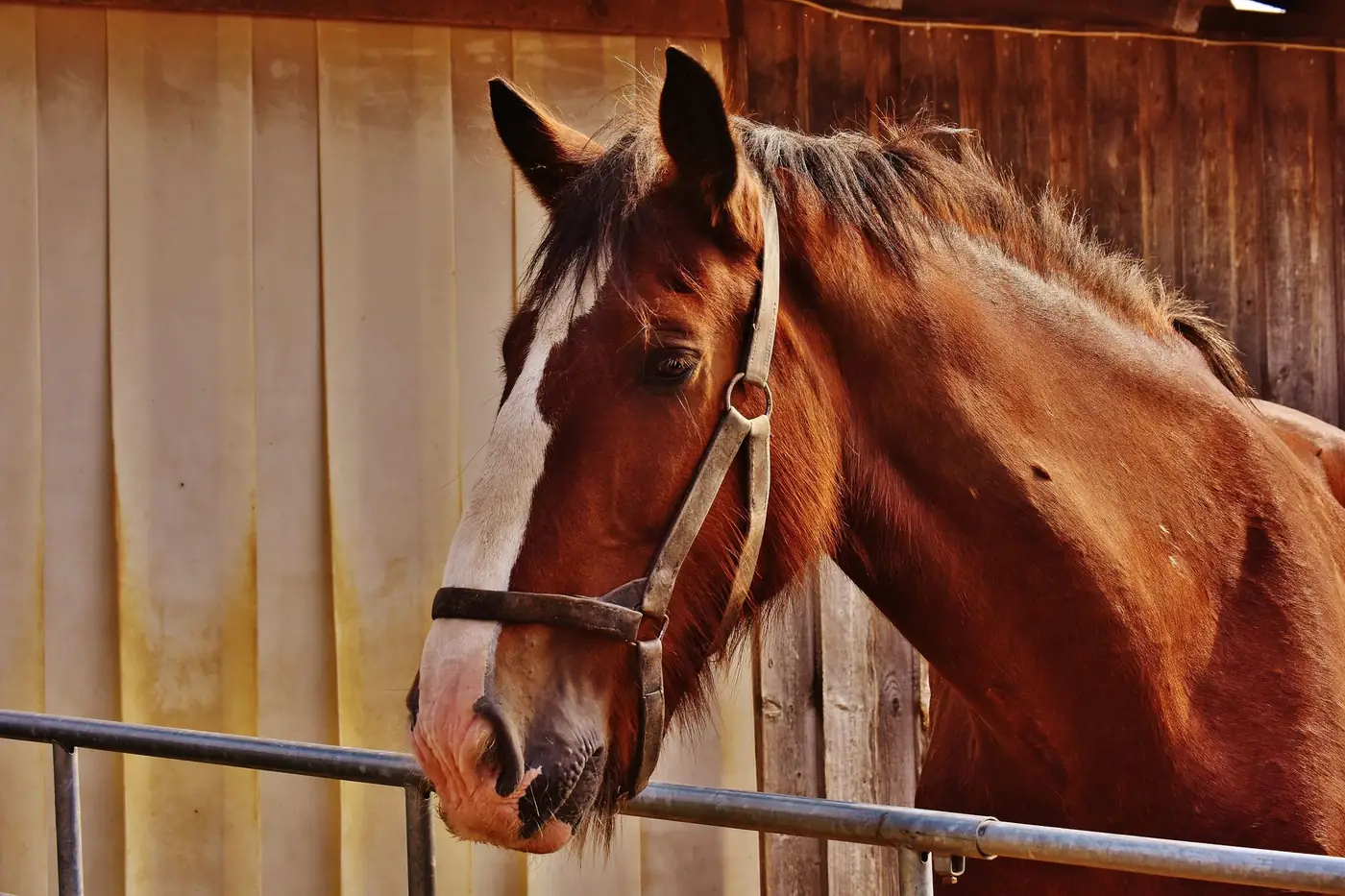
By five months a foal is eating a meaningful amount of hard feed and forage independently of its mare, which matters because it is what makes weaning, whenever it happens, considerably less of a shock than it would otherwise be. We tend toward gradual, staged weaning over abrupt separation wherever the numbers on the yard allow it: taking one mare at a time out of a small group, rather than removing every mare from every foal on the same afternoon, which is calmer for everyone involved, foals and staff included.
What strikes me most, looking back at six months of notes each year, is how little of the real work shows up in a single dramatic moment. There is no equivalent, in this stretch, of the birth itself: no single photograph that captures what changed. It is a great many ordinary Tuesdays, each one slightly improving a young horse's chances of turning into a sound, sensible adult, and that is really the whole job in miniature.