
Conformation is one of those words that gets thrown around by people at sales and in the entries of catalogues without much explanation of what it actually means to look for, and I think that vagueness does real harm, because it turns a learnable, practical skill into something that sounds like taste or instinct when it is neither. Reading conformation properly is closer to reading a set of engineering trade-offs than admiring a picture.
Start With the Basics, Not the Impressive Bits
The temptation with a striking horse is to admire the head, the eye, the general presence, and those things matter for almost nothing when it comes to soundness and performance. What actually matters starts lower down and further back: the angle of the shoulder, the length of the back relative to the horse's overall proportions, the set of the hocks, the straightness of the legs viewed from the front and from the side. A horse can have a plain head and a workmanlike expression and still be built to stay sound for fifteen years of hard work, and the reverse is just as true.
The shoulder is where I look first, because a well-angled shoulder, roughly forty-five degrees from horizontal as a rough working guide rather than a strict rule, tends to produce a longer, freer stride with less concussive impact travelling up through the leg with every footfall. A very upright shoulder produces a choppier stride and, over years of work, tends to load the joints below it in a way that causes problems earlier than it should.
The back and top-line matter almost as much and get overlooked more, largely because they are less visually dramatic than a leg fault. A back that is too long relative to a horse's overall frame tends to be weaker under saddle and more prone to soreness over a working career, while a back that is markedly too short can restrict a horse's natural stride and make collection genuinely uncomfortable rather than merely difficult. There is, again, a correct middle ground, and it is one that becomes far easier to spot once you have specifically looked for it in a few dozen horses rather than trusting a general first impression.
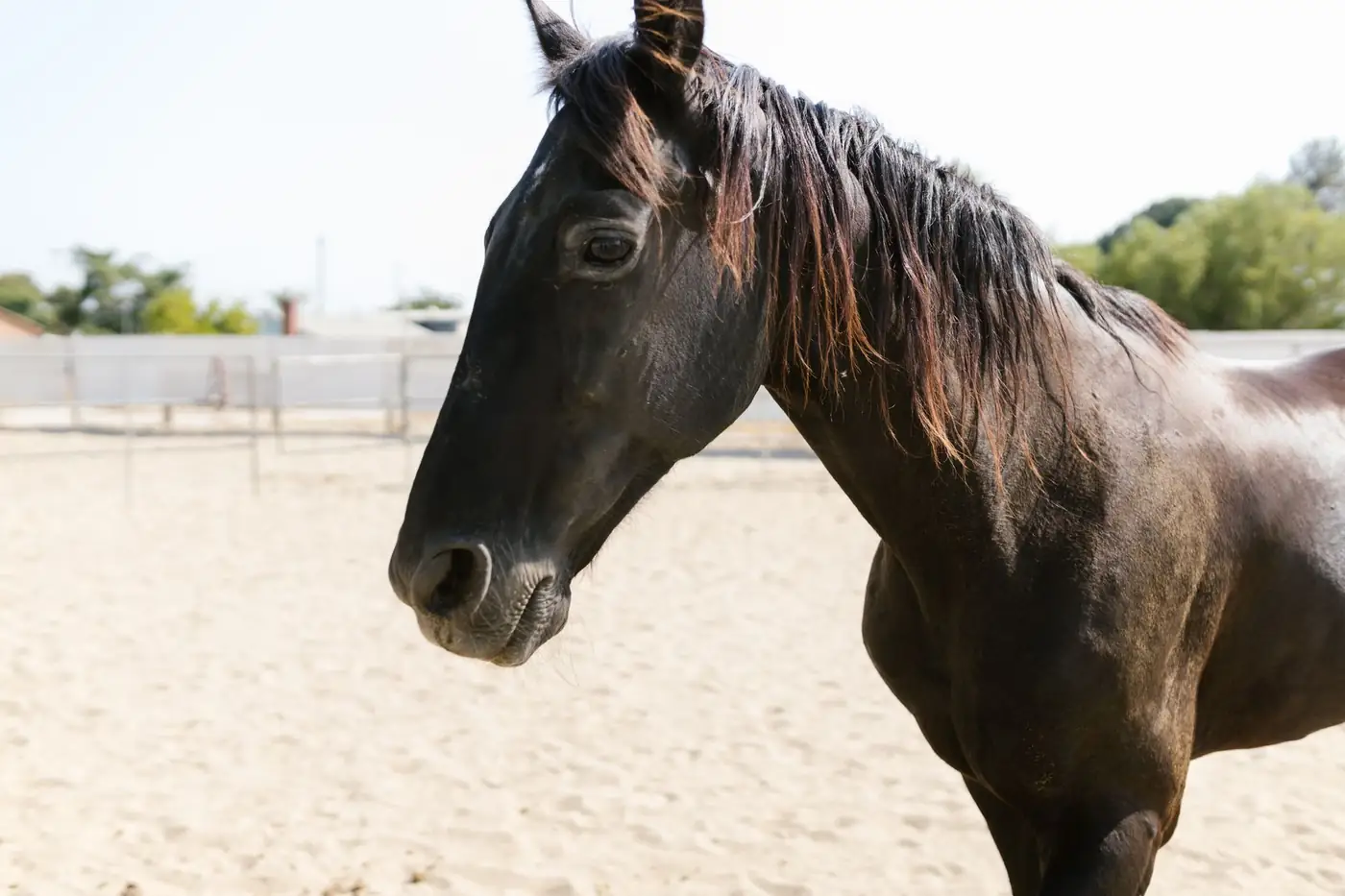
Legs: The Part That Actually Decides Careers
If I had to reduce the entire skill to one area, it would be legs, because more racing and competition careers end because of leg problems than for any other single reason, and most of those problems are, at least partly, predictable from conformation assessed years earlier. Viewed from the front, a leg should drop in a straight, plumb line from the point of the shoulder through the knee to the fetlock and hoof. Viewed from the side, the same plumb-line logic applies through the hock. Deviations from that line, offset knees, toed-in or toed-out feet, sickle hocks, are not automatically disqualifying, plenty of successful horses carry minor faults, but each one represents a small, predictable stress point that a trainer or rider needs to manage rather than ignore.
Pasterns deserve their own mention because they are so often overlooked by anyone not specifically trained to check them. A pastern that is too upright transmits concussion harshly with every stride, contributing to joint problems over time. One that is too long and sloping puts excessive strain on the tendons and ligaments running down the back of the leg. There is a real, narrow, correct middle ground, and it is one of the first things any experienced vetting will assess closely, precisely because it correlates so strongly with a horse's long-term soundness.
Feet, too, deserve more attention than they usually get from anyone judging conformation for the first time. Mismatched feet, one noticeably more upright or boxier than its pair, often point to an old, low-grade limb problem compensated for over months or years rather than a purely cosmetic quirk, and a good vetting will always ask why a mismatch exists rather than simply noting that it does. Feet that are markedly too small for a horse's overall frame carry more weight per square inch of hoof than they should, which over a long career tends to catch up with a horse eventually.
Why This Isn't the Whole Picture, and Why It Still Matters
I want to be honest that conformation is not destiny. Horses with textbook-correct legs break down and horses with visible faults have long, sound careers, because conformation is one input among several, alongside training management, ground conditions, farriery and simple luck. But it is the one input you can actually assess before you commit money or time to a horse, which makes it worth learning properly rather than dismissing as unreliable because it is imperfect.
The practical test I set anyone learning this is simple: stand a horse square on a hard, flat surface, walk around it slowly, and try to describe what you see in plain, specific terms rather than general impressions. Not 'nice front leg' but 'straight from the front, slightly back at the knee viewed from the side'. That discipline of specific description, more than any checklist, is what turns conformation from a vague sense of whether you like a horse into an actual, transferable skill.
Movement Confirms What Standing Suggests
Static conformation is only half the assessment, and I would go as far as saying it is the less reliable half on its own. Watching a horse walk and trot in hand, on a hard, level surface, tells you whether the structure you have just assessed standing still actually translates into efficient, sound movement, and occasionally a horse that looks slightly imperfect standing square moves beautifully, while one that looks textbook-correct standing still reveals an awkward, uneven action the moment it walks off.
What you are watching for in movement is symmetry above almost everything else: whether each hind leg tracks up evenly under the body, whether the horse's hips rise and fall at matching heights on both sides, whether there is any subtle head-nod that can indicate discomfort in a front limb. None of this requires expensive equipment or specialist training to see, only patience and a willingness to watch the same horse walk past you several times rather than forming a judgement on a single pass.