
There is a temptation, once the last foal of the year has been weaned and the yearlings have gone off to the sales, to think of winter as a quiet season, a pause before the real work starts again in spring. It is not a pause. Winter is when next year's foaling season is actually decided, and a mare who goes into it in poor condition or comes out of it undernourished rarely produces her best foal, whatever the stallion's page promises.
Condition Is the Whole Argument
The single biggest factor in a successful pregnancy and a strong foal is a mare's body condition through the winter months, particularly for a mare who is both in foal and still nursing a weanling or was covered late and is carrying through the coldest part of the year. The energy demands of late pregnancy rise sharply in the final trimester, right when grass quality is at its lowest and the mare's own metabolic demands for simply staying warm are at their highest. Getting the feeding balance right through this stretch is, without much exaggeration, the most important nutritional decision made on the whole yard all year.
We condition-score every mare monthly through winter, running hands over ribs, hips and the crest of the neck rather than trusting the eye alone, because a full winter coat disguises weight loss extremely effectively and by the time it is visually obvious, a mare has usually already lost more condition than is easy to put back before spring. Small, regular adjustments beat large, late corrections every time.
Older mares and first-time mothers need particular attention here, for different reasons. An older mare with worn or missing teeth may simply be unable to process enough forage to maintain condition on hay alone, however much is put in front of her, and needs a diet adjusted toward more easily digested feed rather than more of the same. A young mare carrying her first foal is often lower in the pecking order at a shared hay pile and can lose condition simply through being pushed off her share by more assertive herd members, which is a social problem with a nutritional consequence rather than a feeding problem at all.
Shelter and Movement, Not Just Feed
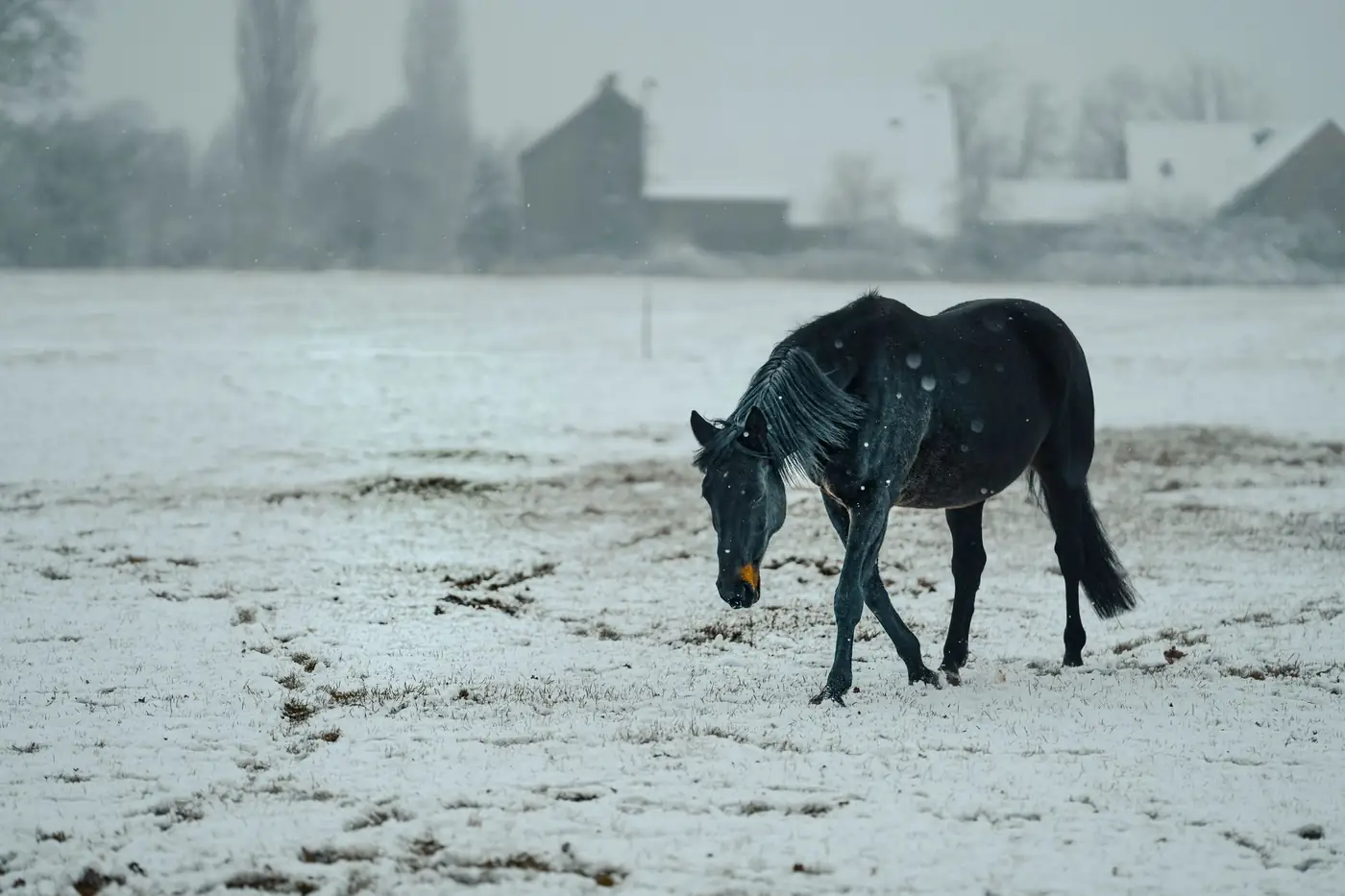
Feeding is only half the picture. Mares kept in through the worst weather without adequate turnout tend to do worse, not better, than mares given sensible daily access to a paddock even in poor conditions, provided they have proper shelter from wind and driving rain when they want it. Movement helps circulation, helps foot health, and, frankly, helps temperament, and a bored mare confined for too long develops behavioural problems that a tired, hungry vet then gets called out to deal with at ten at night in February.
We rug according to individual mares rather than a blanket policy for the whole yard, because a mare that grows a heavy natural coat and copes well unrugged can actually do worse under a rug that causes her to sweat and then chill, while a finer-coated or older mare genuinely needs the extra layer. This sounds like an obvious point and is nonetheless the single most common mistake I see on yards that do not specialise in breeding: treating every horse the same rather than treating every horse as an individual, which is really the whole philosophy behind good broodmare care distilled into one sentence.
Water is the part people forget most often, oddly, given how obvious it sounds once said aloud. Horses drink noticeably less from icy water, and reduced water intake through cold weather is a genuine, well-documented contributor to impaction colic, one of the more serious winter emergencies a stud yard deals with. Checking troughs are not just present but genuinely unfrozen, twice a day if necessary, is unglamorous and completely non-negotiable.
We have taken to adding a small amount of warm water to feed buckets on the coldest mornings, partly to encourage fluid intake by another route and partly because a mare is noticeably more inclined to eat a feed that isn't ice cold at six in the morning. It costs nothing beyond a kettle and a minute's extra time, and I would rather do it as routine than find out the hard way, one January, that a trough froze harder than usual overnight.
The Paperwork Season
Winter is also, unglamorously, when the season's administrative work gets done: covering certificates finalised and lodged, next year's covering plan drawn up, vaccination and worming records brought up to date before the next cycle begins. the Thoroughbred Breeders’ Association runs seminars through the winter months aimed specifically at exactly this kind of planning, and I would recommend them to anyone starting out, not because the content is complicated but because hearing it laid out clearly once saves you learning several of the same lessons the hard way over several separate seasons.
By the time the first buds are properly out and the covering season begins in earnest, the mares who spent the winter well fed, well sheltered and sensibly exercised are visibly, obviously ahead of any that did not, and there is no amount of clever management in spring that fully makes up the difference. It is one of the few genuinely simple truths in this whole business: winter care is not preparation for the season. Quietly, it already is the season.
The Late-Pregnant Mare
A mare due to foal in the early spring spends the entire winter carrying the added physical load of late pregnancy, and this deserves separate mention from general winter care because the demands compound rather than simply add up. Reduced grazing quality, the energy cost of staying warm, and a rapidly growing foal all draw on the same limited resource at once, and a mare who is only adequately fed rather than properly fed through this stretch often foals a smaller, weaker foal than her genetics and general health would otherwise suggest.
We increase feed gradually through the final trimester rather than in one late jump, watching each mare's individual response rather than following a single fixed formula for every mare due that spring. A mare carrying twins, though rare and generally managed out of existence early through scanning precisely because of the risk involved, or simply a mare who runs naturally lean, needs a noticeably different plan to a mare who holds condition easily, and treating both the same is one of the more common and avoidable mistakes made on yards without a dedicated stud manager watching closely.